The 5 Best Barefoot Winter Shoes of 2026 - Tested for 8 Weeks in Alaska. One Clear Winner Emerged.
the wellnessMAGAZINE
US
AdvertisingUpdated September 29, 2026
2026 ALASKA WINTER TEST · 5 SHOES · 8 WEEKS · 200 TEST WALKS
The 5 Best Barefoot Winter Shoes of 2026 - Tested for 8 Weeks in Alaska. One Clear Winner Emerged.
You already love barefoot shoes in spring and summer. Winter is where most of them fail: cold toes, wet
socks and icy roads. So we took five winter barefoot models to Utqiagvik, Alaska - the northernmost town
in the United States - and wore them on the same frozen routes for eight weeks. Only one scored above
9 out of 10 in every category.
8 weeks in Alaska200 test walksWinner: 9.6 / 10
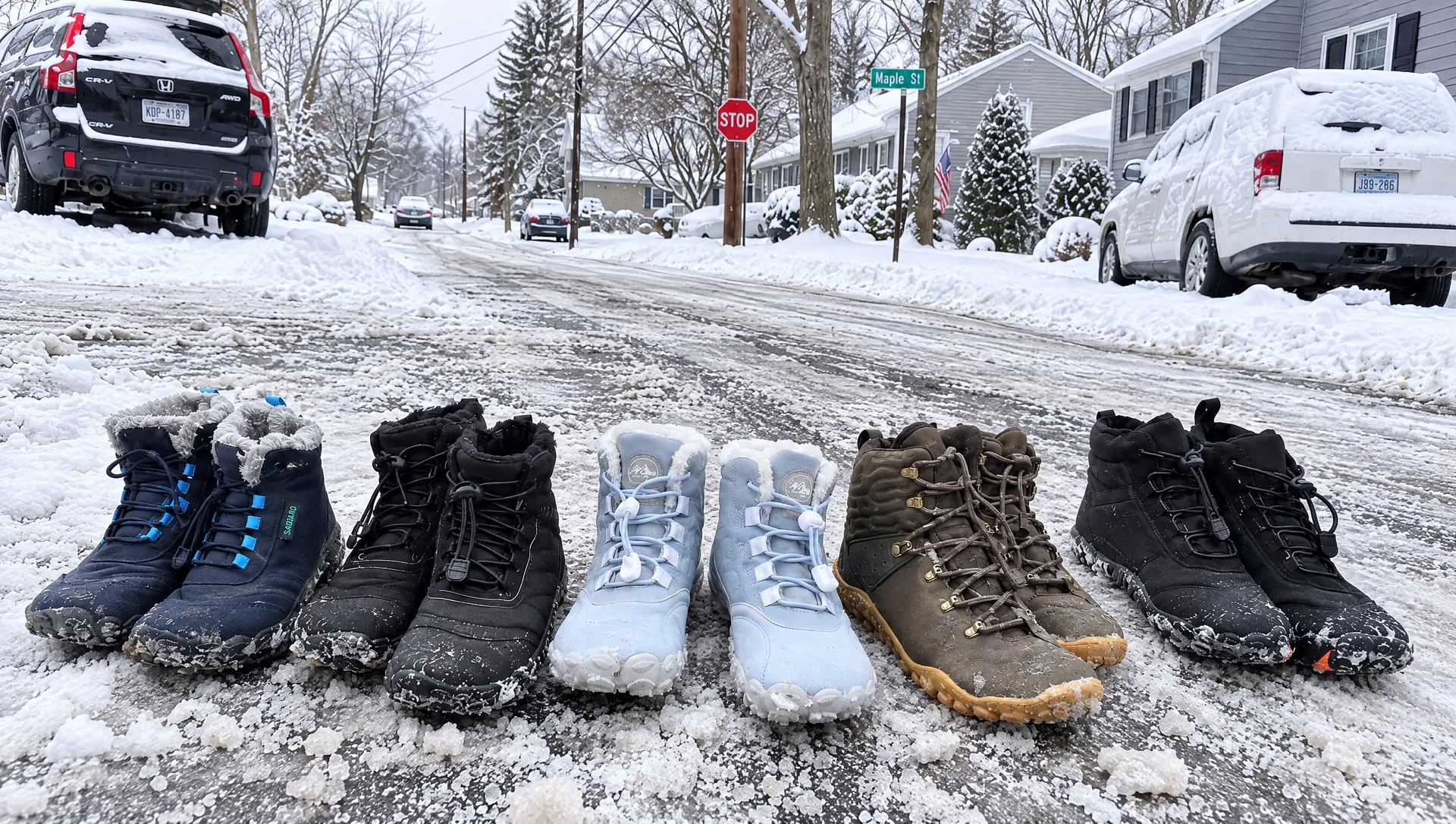
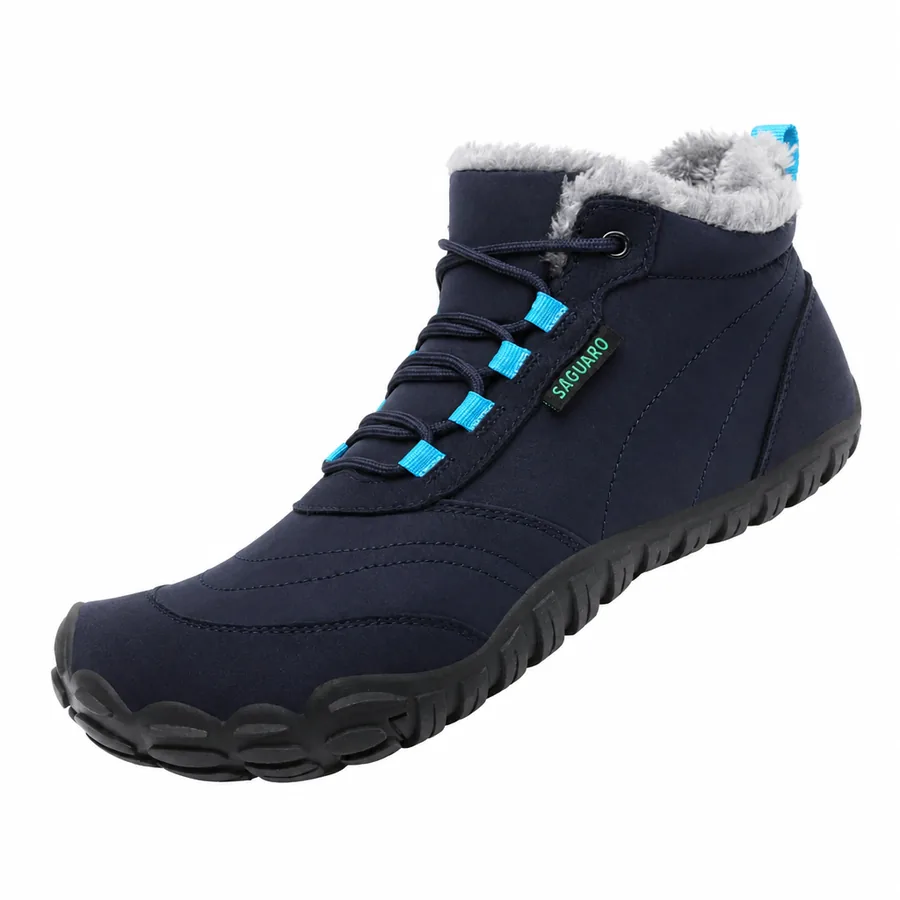
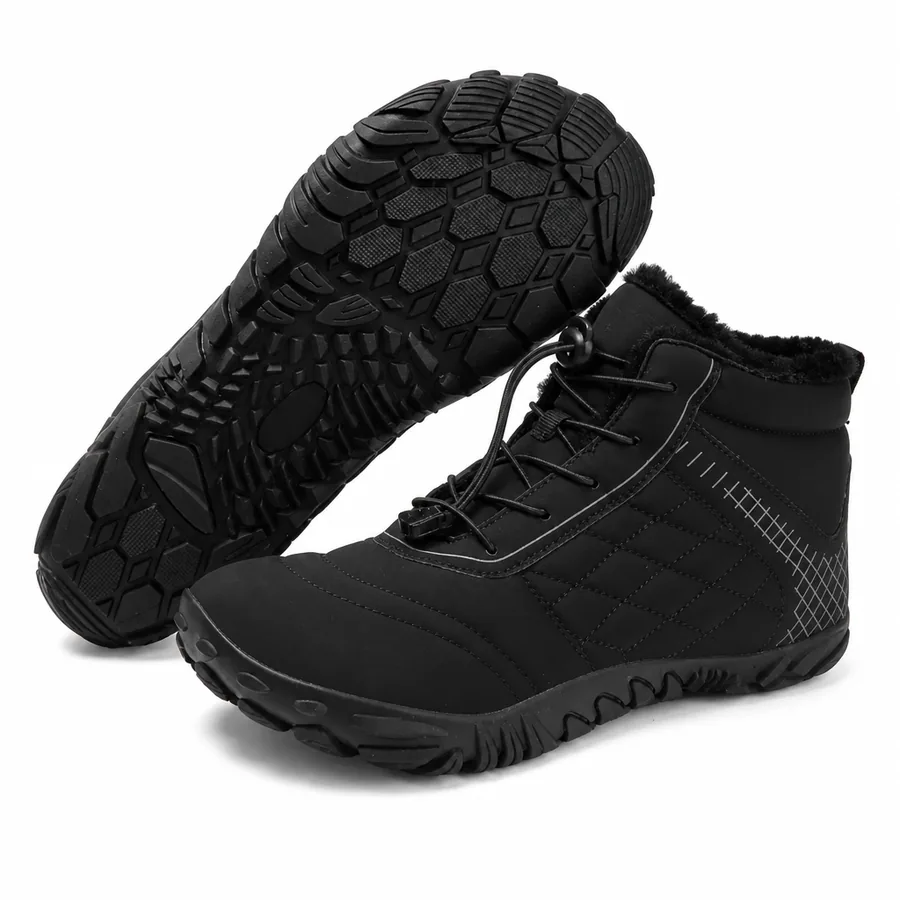
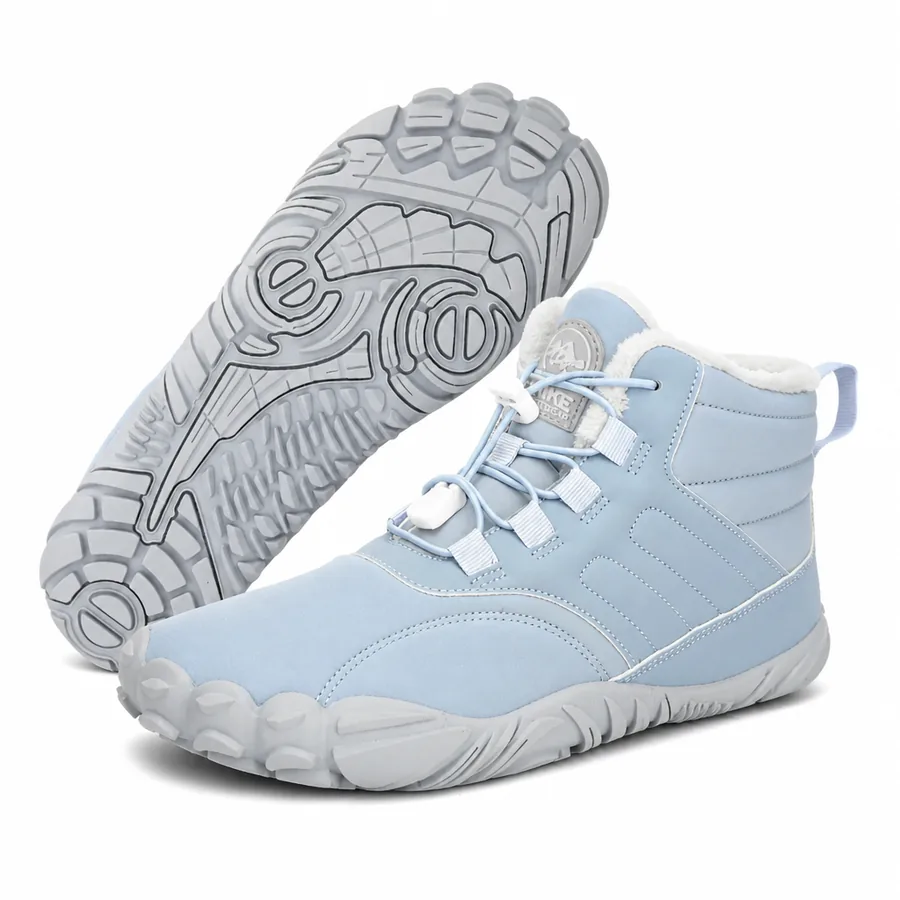
Photo: All five test pairs after a morning walk on packed snow and slush. From left: SAGUARO Will II, Peak Frost Flow, Hike Caspar Pro, Vivobarefoot Tracker Forest ESC, Bright Footwear Polar.
By Ryan MitchellOutdoor expert writing for The Wellness Magazine
Barefoot-shoe wearers already know what a wide toe box, zero-drop platform and flexible sole feel like. The winter question is harder: which model keeps those benefits when the ground is frozen, wet and slippery? After eight weeks in Alaska, the answer was clear.
How we tested
A winter shoe should be tested where winter arrives first. In Utqiagvik, on Alaska's Arctic coast, snow
can fall as early as August and the gravel roads freeze over in September. That gave us eight weeks of
real winter conditions in one place: cold drizzle, slush, packed snow, sheet ice and the polished floors
of the local grocery store.
From August 3 to September 27, 2026, five local testers - including three women over 60 who walk these
roads every day - rotated through all five pairs. Each tester wore a different pair on every walk, always
with the same medium-weight merino socks, so no shoe got the easier days. Every pair logged 40 walks,
200 in total, at morning temperatures between 21°F and 38°F.
After each walk, testers scored the shoe on the spot: how securely it gripped on ice and wet surfaces, how
warm and dry their feet stayed, how freely their toes could move, how the fit felt with winter socks and
whether they would wear it again the next morning. Grip, warmth, movement and fit are averaged across all
200 walk logs; value is scored on current price, customer ratings and return terms.
Grip counted most, and for good reason. For many older women, fear of slipping changes the entire way they
walk: steps get shorter, the body tenses and winter walks are skipped altogether. So one question decided
this test more than any other: in which shoe did testers feel most secure when the road turned to ice?
The answer was Polar.
Four winter questions. Only one shoe answered yes to all four.
Does the outsole feel secure on ice, slush, packed snow and smooth indoor floors?
Does the shoe stay warm without becoming heavy and rigid?
Is there enough toe space for natural movement and winter socks?
Does the fastening hold the heel securely during normal walking?
What experienced barefoot wearers expect
All the barefoot benefits - rebuilt for winter
A serious winter barefoot shoe should not merely look like a warmer sneaker. It needs to preserve toe
freedom, zero-drop alignment and flexible movement while adding insulation, water resistance and a
more secure outsole. In our test, only one shoe delivered all four without feeling like a conventional
boot: Polar.
Wide toe space
Room for natural toe spread, thicker socks and feet that change volume during the day.
Flexible ground contact
A flexible sole can help the foot adapt to the walking surface instead of fighting a rigid platform.
Confident winter grip
Full rubber coverage and a predictable tread pattern matter when ice, slush and packed snow reduce traction.
Warm, water-resistant protection
Warm linings, protected uppers and higher collars keep winter out without taking barefoot movement away.
The comparison standard
Every shoe was scored on the same five criteria - after every walk
30%
Grip and walking stability
Traction on icy roads, packed snow, slush and smooth indoor floors, plus heel security on every step.
25%
Warmth and weather protection
Warm feet on sub-freezing mornings and dry socks after drizzle, slush and snow.
20%
Natural movement and toe space
Sole flexibility, heel-to-toe geometry and usable forefoot room.
15%
Comfort and fit
Weight, fastening, sock room, sizing clarity and all-day wearability.
10%
Value and purchase confidence
Current price, customer ratings, returns and size availability.
Polar earned the highest grip (9.8) and weather (9.7) scores in eight weeks of Alaska winter and was the only shoe above 9.0 in every category. Testers named it again and again as the pair they trusted most on icy roads.
Test winner: the best grip on icy roads and the warmest, driest feet of all five shoes
Our test score9.6/ 10
Customer reviews5.0/ 5★★★★★★★★★★8,793 reviews on bright-footwear.com
Grip and stability9.8
Weather protection9.7
Natural movement9.5
Comfort and fit9.3
Value9.6
Polar was the pair testers reached for first - and the one they were most reluctant to hand back. From the first freezing morning in Utqiagvik, it felt like a winter version of the barefoot shoes they already wear all summer: the flexible 4 mm sole bent as easily as a summer model, the wide toe box left room for thick merino socks, and the high water-resistant upper kept feet warm and dry through freezing drizzle, slush and fresh snow.
Where Polar pulled away was grip. In the walk logs, one phrase came up more often than any other: better hold on icy roads. On frozen gravel and glazed sidewalks, testers kept their normal stride instead of shuffling. Stepping from packed snow onto the wet, polished floor of the grocery store, nobody reported the half-second of panic they felt in the other pairs.
“The first icy morning I braced myself like I always do. Two blocks later I realized I was walking normally again. That has not happened in winter for years.”
Linda, 64, tester
Warmth held up just as well. Polar scored 9.7 for weather protection, the highest in the test, and not one tester logged wet socks after a walk in Polar. For the coldest days, it is also available with an extra-fleece lining upgrade - more warmth, same barefoot feel. The only drawback testers could name: you cannot try it on in a store, because Polar is sold online only.
A superb hiking boot with Michelin grip - but no insulation for real winter
Our test score8.6/ 10
Customer reviews2.7/ 5★★★★★★★★★★12,889 Vivobarefoot reviews on Trustpilot
Grip and stability9.2
Weather protection8.2
Natural movement9.3
Comfort and fit8.4
Value6.4
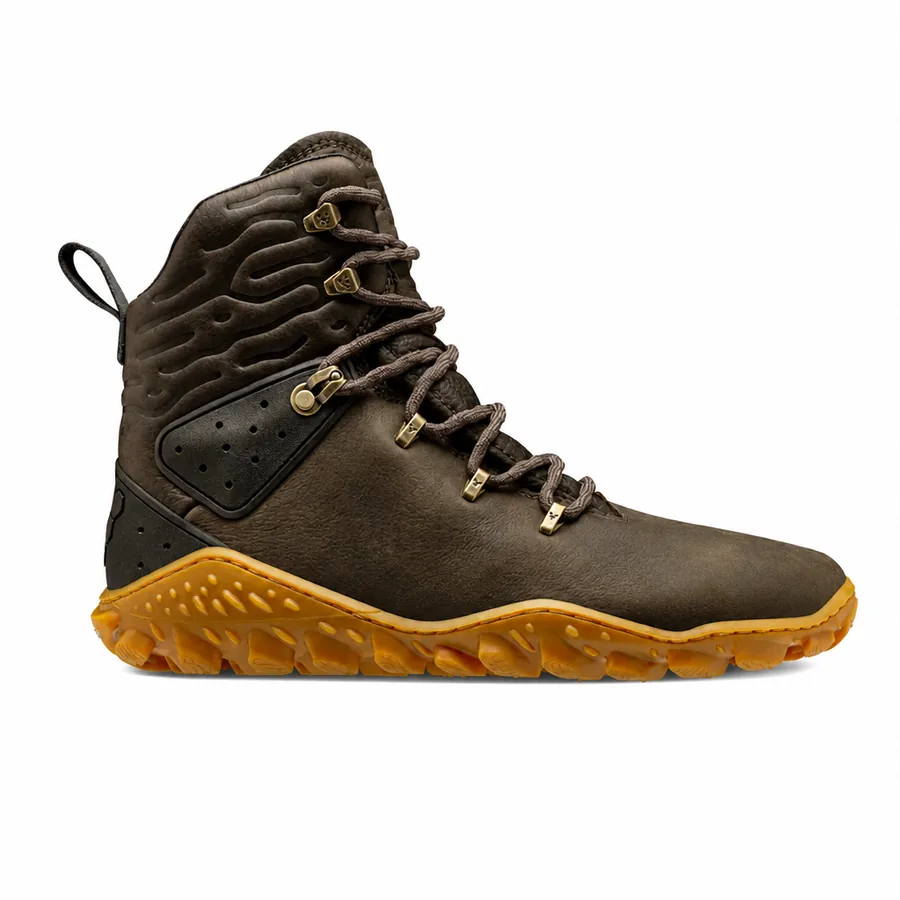
Tracker Forest ESC is one of the best barefoot hiking boots you can buy: a wild-hide leather upper, a Michelin Outdoor ESC outsole with a 2.5 mm base and 7 mm lugs, and outstanding ground feel. On packed snow and frozen gravel, those deep lugs bit hard. But it is a forest boot, not a winter boot - there is no insulated lining, and on the coldest Utqiagvik mornings testers noticed it within the first mile.
“On packed snow it felt amazing. On the smooth ice outside the store, those big lugs had nothing to bite into - and after forty minutes my toes were cold.”
Dave, 52, tester
That is why it trails Polar on icy roads (9.2 vs. 9.8) and clearly on warmth (8.2 vs. 9.7). Testers who wanted warm feet ended up layering two pairs of socks, which cost them toe room. At around $280 - $220 more than Polar - it is a great boot for autumn trails, but not the smarter choice for everyday winter.
The closest rival on paper - until the fit started to shift
Our test score8.3/ 10
Customer reviews4.5/ 5★★★★★★★★★★1,265 reviews on saguaro.com
Grip and stability8.1
Weather protection7.8
Natural movement9.0
Comfort and fit8.1
Value8.8
On paper, Will II is Polar's closest rival: fleece lining, water-resistant upper, 4 mm zero-drop sole and a similar price. On the Alaska routes, the difference showed within the first week.
“I stopped three times on one walk to re-tie the laces. On an icy road, bending down in the middle of the street is the last thing you want to do.”
Margaret, 61, tester
Testers repeatedly had to straighten a shifting insole and tongue - the same complaints SAGUARO's own buyers leave in their reviews. It also runs small, which becomes a real problem with thick winter socks. Grip on ice was decent (8.1), but clearly behind Polar.
Waterproof on the label - but the fit loosened as the fur lining packed down
Our test score8.1/ 10
Customer reviews4.9/ 5★★★★★★★★★★3,139 reviews on peak-footwear.com
Grip and stability7.8
Weather protection8.3
Natural movement8.5
Comfort and fit7.7
Value8.4
Frost Flow is the only shoe in the test marketed as waterproof, and its fur-lined collar kept the cold out well on still mornings. Peak's own size note warns that the shoe feels snug around the instep at first and that the fur lining compresses with wear. That is exactly what testers logged: tight in week one, a slipping heel by week four.
“By week four my heel lifted a little every time I stepped off the curb onto ice. After that I simply walked slower in them.”
Carol, 67, tester
On icy roads and the wet grocery-store floor, that small movement made every step feel less certain, and testers consistently preferred Polar's more controlled step and clearer ground contact. Peak also publishes no outsole, tread or temperature specifications to back up its claims.
Light and flexible - and the coldest shoe in the test
Our test score7.9/ 10
Customer reviews4.8/ 5★★★★★★★★★★3,994 reviews on hike-footwear.com
Grip and stability7.9
Weather protection7.2
Natural movement8.6
Comfort and fit8.0
Value7.8
Caspar Pro moved naturally and felt light underfoot. It was also the coldest shoe in the test by a clear margin.
“Lovely for the first ten minutes. By the end of a 22-degree morning walk, my toes were numb.”
Jess, 41, tester
Its weather score of 7.2 was the lowest in the test, and on icy roads the flatter sole felt noticeably less secure than Polar. Hike publishes no insulation specification or temperature rating, and at $79.95 it costs $20 more than the test winner.
Polar won every category. No other shoe came close.
Polar won the complete winter test because it solved the exact problem summer barefoot-shoe owners face in winter. It stayed warm and dry through eight weeks of Alaska winter without becoming stiff, gave testers the most secure footing on icy roads, kept natural toe space for winter socks - and did it at the lowest price of the five.
This was not a narrow win. Polar finished first in grip, weather protection, natural movement, comfort and
value - a full point ahead of the runner-up, a $280 Vivobarefoot hiking boot. For the coldest days, the optional
extra-fleece lining adds even more warmth without switching to a stiff conventional boot.
Frequently asked questions
Winter barefoot shoe FAQ
Can I keep wearing barefoot shoes through winter?
Yes. A good winter barefoot shoe keeps the wide toe box, zero-drop platform and flexible sole you already know, then adds warmth, higher coverage, water resistance and winter grip. In eight weeks of Alaska winter, Polar was the only model that delivered all of it without feeling like a conventional boot.
Which shoe gave the most secure footing?
Polar, by a clear margin. It earned the highest grip and stability score in the test (9.8 / 10) on icy roads, packed snow, slush and smooth indoor floors, and testers named its hold on ice more often than any other strength. No shoe can prevent every slip, but a secure outsole and a locked-in heel make every winter step feel more controlled.
Are the compared shoes waterproof?
Only Peak's Frost Flow is marketed as waterproof. Polar, SAGUARO Will II and Hike Caspar Pro are water-resistant; the Vivobarefoot Tracker Forest ESC uses a leather upper without an insulated lining. Through freezing drizzle, slush and fresh snow, Polar's water-resistant high-top kept testers' feet dry on every walk and earned the highest weather score in the test (9.7 / 10).
Should I size up for winter socks?
Measure both feet late in the day and follow the brand's size chart. Leave room for the winter socks you actually plan to wear, but do not size up automatically - extra length lets the heel slip. Polar's wide toe box fit thick merino socks in every tester's regular size.
What should older women prioritize?
Grip first, then a secure heel. Look for a full rubber outsole, simple fastening, low weight and enough toe room for warm socks. In our Alaska test, Polar scored highest for grip and stability (9.8 / 10) - the category we weighted most heavily for exactly this reason.